
Opinion
A Terminal Is Not Enough—Unless It Works
Maldivians are understandably pleased with the long-awaited opening of the new terminal at Velana International Airport, despite delays spanning three government terms. A decade has passed since the...
Mohamed Hilmy
13 July 2025, 00:00
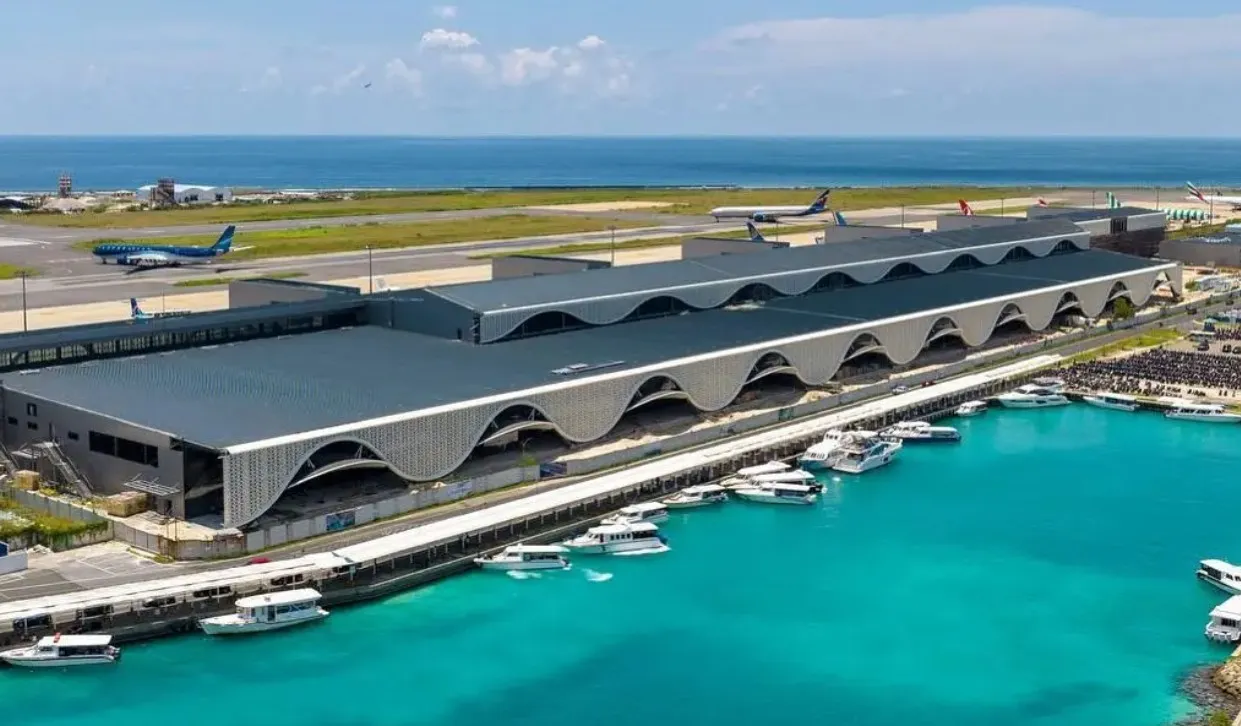
Maldivians are understandably pleased with the long-awaited opening of the new terminal at Velana International Airport, despite delays spanning three government terms. A decade has passed since the promise was first made—and now, it’s finally happening. But the real question is: will this new terminal actually change anything?
A terminal isn’t just about glass walls and grand halls. It must function—reliably and efficiently—for the millions who pass through it. And that’s where the truth lies hidden.
What Looked Finished—Wasn’t
In 2023, President Ibrahim Mohamed Solih’s administration tried to present the new terminal as complete. From the outside, it looked impressive—modern glass façades surrounded by fences, projecting progress. But those who actually visited the site knew better: the terminal was far from ready. The basic infrastructure needed to operate such a massive facility was missing. And that’s something the public hadn’t been told.
Infrastructure: The Missing Foundation
A terminal that serves over 7 million passengers annually must have more than just check-in counters and gates. It must have power. Water. Sewage. Drainage. Roads. Without these, the terminal is a shell—nothing more.
Electricity:
When the contract was awarded to the Saudi Binladin Group, no consideration was given to the additional power demand the new terminal would create. There was no reliable way to generate, store, or distribute electricity. Even if power could be produced, there was no system in place to supply it to the terminal.
Water Supply:
The terminal uses a water-cooling air conditioning system—but there was no pipeline to deliver water. No water generation system. Nothing. A structure serving millions, yet no way to keep it cool.
Sewage System:
Perhaps the most basic necessity: toilets. Yet there was no sewage infrastructure to support the terminal. Millions of passengers. No toilets. That was the reality.
President Muizzu: From Appearance to Functionality
When President Dr. Mohamed Muizzu visited the site, he identified these issues immediately. Power failures in Malé could shut down the entire airport within seconds. Backup generators weren’t enough to run the terminal for even seven minutes.He acted quickly—and this is where the real work began.
What Was Done—and What Was Missing
Power Security
MACL constructed a new powerhouse at Hulhumalé, equipped with four generators. New electrical distribution systems were laid beneath and around the runway, connecting the entire airport to a secure and independent energy source.
Water Supply
A 2-kilometre pipeline was built—entirely by MACL’s own team—without external contractors. In record time, the pipeline connected the new terminal to a unified water system.
Drainage and Sewage
A 2.7 km drainage system was completed by drilling beneath the highway. Sewage lines were installed. A further 6 km of trench lines were added to ensure rapid drainage during rain and regular operations.
Roads and Traffic Flow
Previously ignored, road development began in earnest. MACL began building state-of-the-art roads in front of the terminal and access roads linking to the bridge and Hulhumalé highway. Traffic management was finally being considered as part of the terminal ecosystem.
Head-of-Stand Road
This critical road—used by service vehicles under the aerobridges—was completely missing. Without it, aircraft services like catering and baggage handling couldn't function. Under President Muizzu’s directive, the road was constructed quickly, to runway-level standards.
Overlooked: Rainy Day Transfers
Under the new T1–T2 terminal system, passengers must be transferred between terminals. But when it rains, transport stalls. There was no weather-proof system in place. Once again, MACL stepped in. Despite technical challenges, they completed the physical link to ensure operations wouldn’t be interrupted by weather.
So, How Much Was Really Done?
Without the core infrastructure—power, water, sewage, drainage, roads—only 54.63% of the terminal was complete over the span of nine years. But when you include the essential systems required to make it functional, the completion rate drops to just 40%. In comparison, under President Muizzu’s administration, nearly 60% of the terminal was completed—in just 18 months.
The Bottom Line
A terminal is not just steel and glass. It must work. For
years, the public was shown progress—but not told the truth. The real
achievement is not in opening the doors. It's in making sure what’s behind
those doors actually works.
Leave a comment
Comments
No comments yet. Be the first to comment!
Latest News
News
Maldives Tourism Opens 2026 Strong as Arrivals Top 303,000, Led by China and Russia
11 Feb 2026
News
Over 460 Nominations Signal Growing Industry Momentum for Hotelier Maldives Awards 2026
11 Feb 2026
News
Maldives Targets Surge in German Visitors as Visit Maldives and DERTOUR Deutschland Seal Strategic Tourism Partnership
11 Feb 2026
News
Maldives and Germany Hold Official Talks to Strengthen Cooperation
11 Feb 2026